Service
Generator Installation
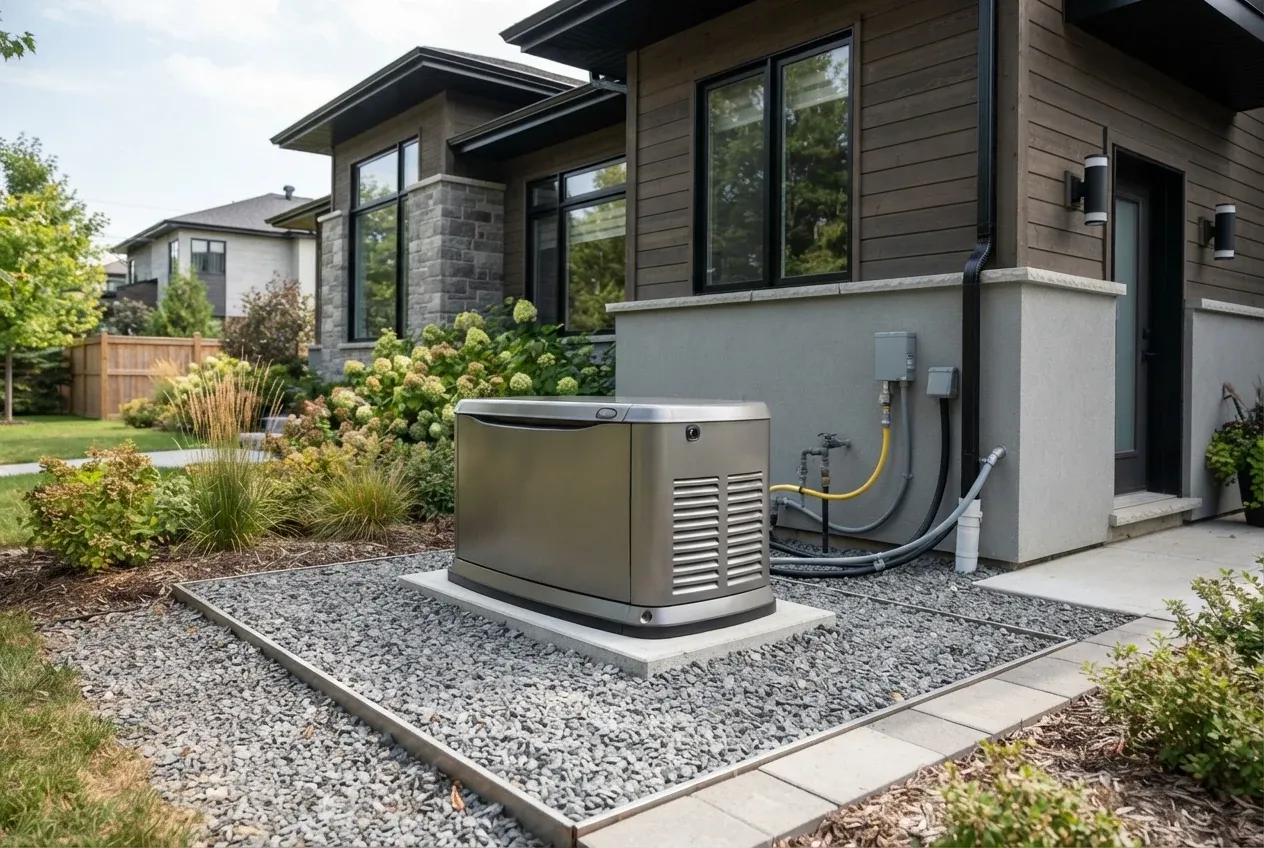
The generator itself is the visible part. The transfer switch is the part that determines whether the installation is safe, and it is the part that is regulated.
Get connected
Free to use. We route your call to an independent licensed electrician who covers your ZIP code.
The transfer switch is the regulated part
If you take one thing from this page, it is that the transfer switch matters more than the generator. A generator is a machine that makes electricity. A transfer switch is what ensures that electricity goes into your house and not out onto the utility network.
Backfeeding, energising utility lines from a customer generator, is the reason transfer switches are mandatory. Line workers restoring power are entitled to expect a de-energised circuit. This is also why the “suicide cord” arrangement occasionally described online is both illegal and genuinely lethal.
Whole-house or essential circuits
Two approaches, with a substantial cost difference. A whole-house transfer switch carries the entire service and needs a generator sized for it. An essential-circuits switch feeds a subpanel with selected loads, refrigeration, heating controls, a sump pump, some lighting and outlets, and needs a much smaller generator.
For most households the essential-circuits approach delivers most of the benefit at a fraction of the cost. The exercise worth doing is listing what genuinely must run.
Sizing for starting current
The most common sizing error is using running watts. Motors draw several times their running current for the moment they start. A well pump, an air conditioning compressor, and a refrigerator all do this. A generator sized on running load will stall when the pump kicks in, which, during an outage, is exactly when you notice.
Signs you may need this
- 01Outages that last long enough to threaten food, heating, or water
- 02Medical equipment or a sump pump that cannot be without power
- 03Working from home where an outage means lost income
- 04Currently running extension cords from a portable generator
- 05A portable generator with no safe way to connect to the house
- 06An area with overhead distribution and frequent storm outages
Common problems
What actually goes wrong
Backfeeding
The serious hazard. Connecting a generator to the house without a transfer switch can push power back onto the utility lines, endangering line workers and anyone nearby. It also destroys the generator when utility power returns. This is why transfer switches are mandatory rather than advisory.
Extension cords as a permanent arrangement
Running cords from a portable generator through a window works, badly. It cannot power anything hardwired, furnace, well pump, sump pump, and cords through openings are both a trip and a weather hazard.
Undersized generators
A generator sized on nameplate wattage without accounting for motor starting surge will stall when the well pump or air conditioning starts.
Fuel supply not considered
Natural gas, propane, and diesel each have different implications for runtime, refuelling, and installation. Propane tanks need sizing for realistic runtime.
Placement and exhaust
Generators produce carbon monoxide and need clearances from windows, doors, and vents. Placement is regulated, not a matter of preference.
How the work usually goes
- Step 01
Load assessment
Deciding what needs to run during an outage, the whole house or selected essential circuits, which determines generator size and transfer switch type.
- Step 02
Fuel and placement planning
Establishing fuel source, tank sizing where applicable, and a location meeting clearance requirements.
- Step 03
Permits
Generator installations require electrical permits, and often mechanical or gas permits too. Some jurisdictions have noise or setback rules.
- Step 04
Pad and set
Preparing the base and setting the unit.
- Step 05
Transfer switch installation
Fitting the transfer switch, which is the electrical heart of the installation, and connecting the selected circuits.
- Step 06
Fuel connection and commissioning
Fuel connected by the appropriate trade, then the system tested under load and the automatic exercise cycle configured.
Read this first
Safety
considerations
- 01
Never connect a generator to the house without a properly installed transfer switch. Backfeeding can kill utility line workers.
- 02
Never run a generator indoors, in a garage, or near windows and vents. Carbon monoxide from generators is a recurring cause of fatalities during outages.
- 03
Portable generators need a properly installed inlet and interlock to connect safely to the house.
- 04
Standby generators need scheduled maintenance. An untested generator often fails at the moment it is needed.
What affects the cost
We do not
publish prices.
Electricians in the network set their own rates. Quoting a figure on someone else's behalf would not be honest. These are the factors that move the number.
- 01Generator capacity and whether it is air or liquid cooled
- 02Whole-house versus essential-circuits-only transfer switch
- 03Fuel type and whether a gas line or propane tank needs running
- 04Distance from the generator to the panel
- 05Site preparation and pad requirements
- 06Electrical, mechanical, and gas permits
- 07Ongoing maintenance, which standby generators do require
Straight answers
Generator Installation questions
What is a transfer switch and do I really need one?
A transfer switch isolates your home from the utility supply before connecting the generator, so the two can never be connected at the same time. Without it, generator power can flow back onto utility lines. Potentially killing line workers who reasonably expect a de-energised circuit. It is required, it is inspected, and there is no safe workaround.
Standby or portable?
Standby units are permanently installed, start automatically, run on natural gas or propane, and can power the whole house. They cost considerably more and need maintenance. Portable units cost far less but require manual starting, refuelling every several hours, and, connected properly, an inlet box and interlock. The right answer depends on how long your outages typically last and whether anyone will be home to start it.
What size generator do I need?
It depends on what you want running. Essential circuits only, refrigerator, furnace, some lighting, a sump pump, needs far less than whole-house operation with air conditioning. The critical detail is motor starting surge, well pumps, air conditioning compressors, and refrigeration draw several times their running current at startup. Sizing on running watts alone produces a generator that stalls.
How often does a standby generator need servicing?
Manufacturers typically specify annual servicing plus oil changes based on running hours, and most units run a weekly self-test automatically. This matters more than people expect. A generator that sits unmaintained for years is quite likely to fail during the outage it was bought for. Budget for maintenance as part of the decision.
Is battery backup an alternative?
For some households, yes. Battery systems are silent, need no fuel, require little maintenance, and start instantly. Their limitation is runtime and capacity: they suit shorter outages and lower loads unless heavily specified, and paired with solar they recharge during extended outages. For multi-day outages with heavy loads, a fuelled generator is usually still the practical answer.

Get connected
One call. One electrician. Yours.
Free to use. We connect you with an independent licensed electrician who covers your ZIP code, then step out of the way.
A free connection service. Electricians in our network are independent and responsible for their own work.